
Emotional intelligence is the ability to recognize and respond to emotion, in yourself and in the people around you.
It shapes nearly every moment that matters. And it can be developed.
 Free for seven days.
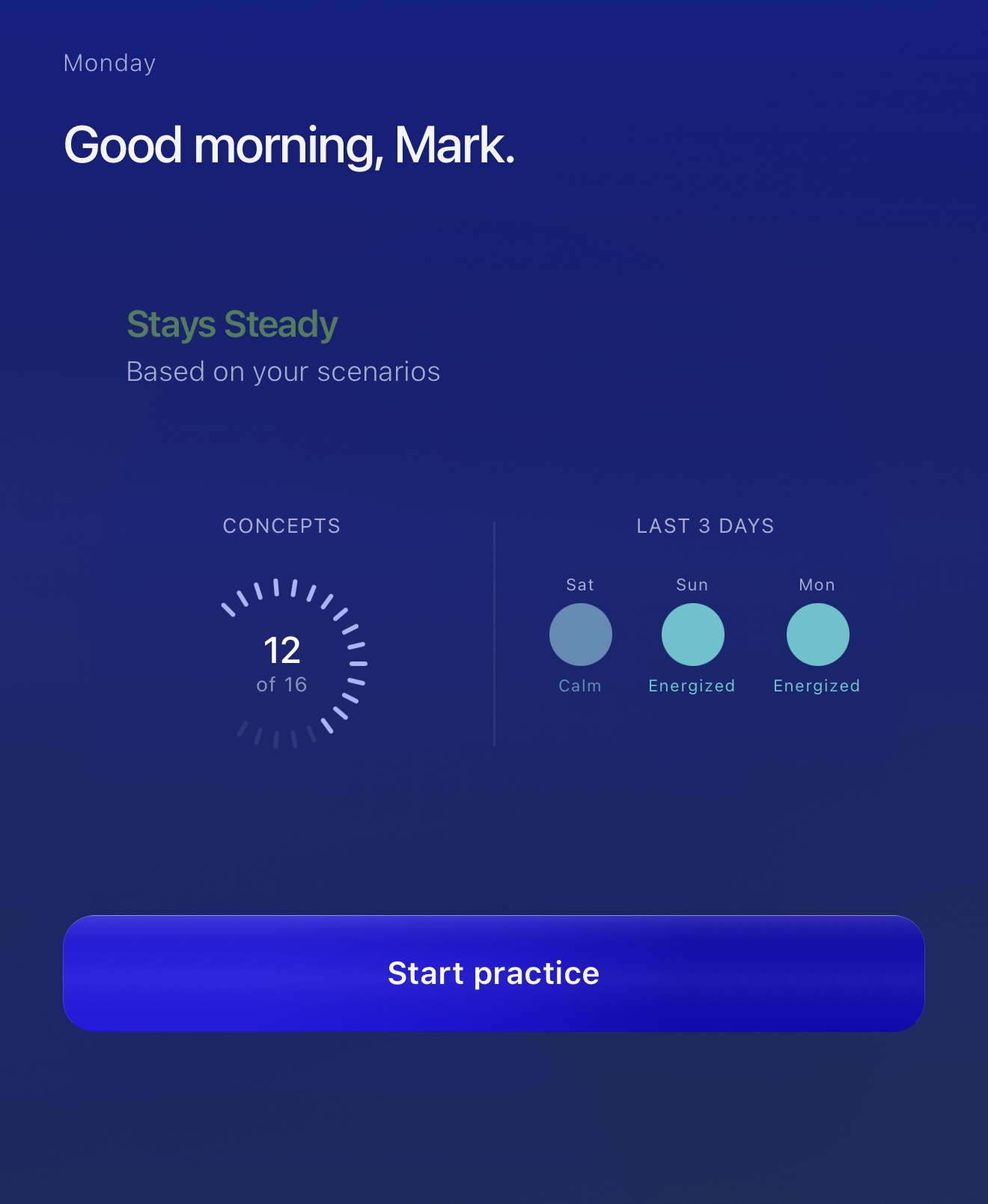
ForgeEQ, from SHFT, is how you develop your emotional intelligence. It puts you inside the situations that test you, shows you what your responses reveal, and makes you a little more capable each time at the moments that used to catch you off guard.
How it works.
Three movesName how you actually feel.
You open ForgeEQ and check in with how you are really feeling — named with precision rather than a vague good or bad. Over time those check-ins become a record of your patterns.
Respond, then see what it reveals.
ForgeEQ puts you inside realistic situations, the kind you recognize from your own week, and asks how you would respond. You choose. It shows you what your choice reveals and names the skill behind it.
Practice that meets you where you are.
The more you use it, the more it learns. ForgeEQ notices how you tend to respond and adjusts what it shows you, so the practice meets you where you actually are instead of where the average person is.
Five parts, one practice.
Scenarios
A library of realistic situations that put your emotional intelligence to work — each one followed by feedback that names exactly what was happening and why your response matters.
Terms
The vocabulary of emotional intelligence, from Self-Awareness to Emotional Hijacking, taught the way you actually use it rather than the way a textbook lists it. The more precisely you can name what you feel, the more you can do with it.
Packs
Focused collections built around the situations that come up most: Managing Up, Difficult Conversations, Under Pressure, Inner Game, Repair, and more.
Mood tracking
Check in with how you are actually feeling, named with precision rather than a vague good or bad. Over time it becomes a record of your patterns and the raw material your practice draws on.
brittAlgo
ForgeEQ runs on brittAlgo, SHFT's engine for reading behavioral patterns. It learns how you respond and shapes your practice around it, so the work you do is yours specifically and not a generic program everyone runs.
See where the work happens.
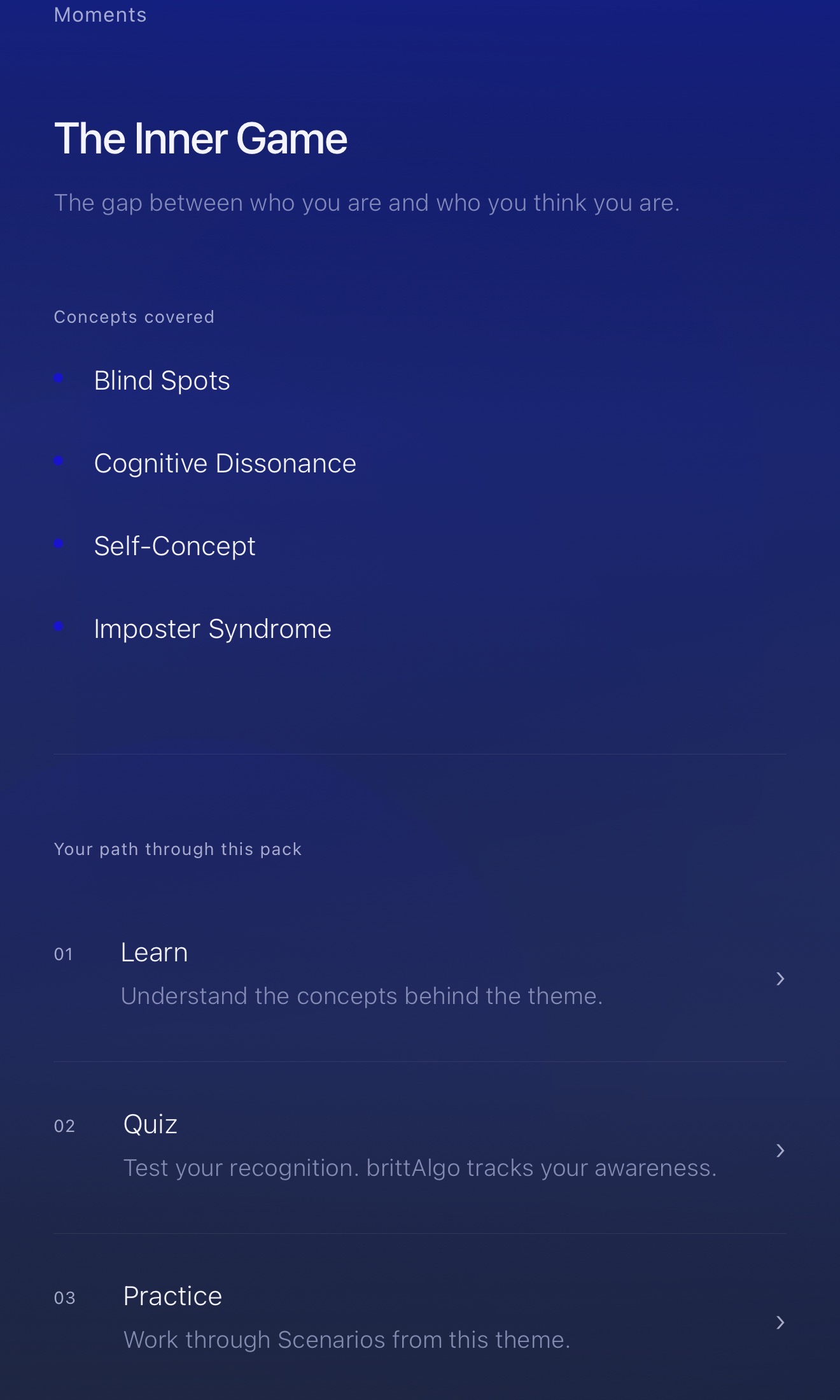
Packs
Each pack moves you through a theme — learn the concepts, test your recognition, then practice the scenarios behind it.
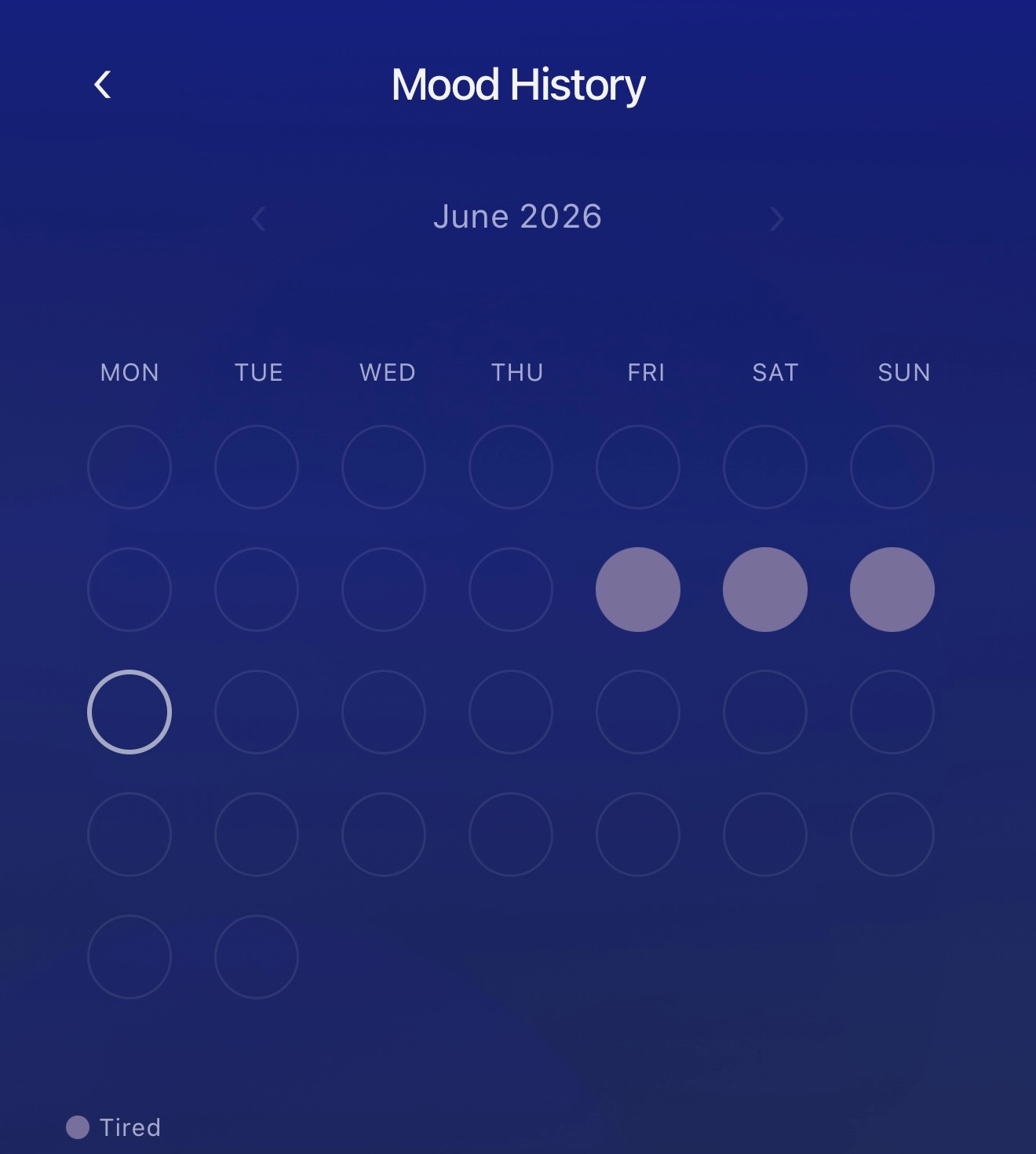
Mood history
Your check-ins build into a calendar of how you have actually felt, so patterns become something you can see.
Start free for seven days.
Works out to about $8.99 per month.
Cancel anytime from your App Store subscriptions. The free trial gives you full access, so you can decide before you pay anything.
Questions, answered.
How is this different from therapy or a wellness app?
Therapy is reactive. Books stay theoretical. Generic wellness apps were not built for people who take their inner work as seriously as their professional work. ForgeEQ was. It makes emotional intelligence something you practice and track, with feedback specific to how you actually respond rather than advice meant for everyone.
What do I actually do each day?
You check in with how you are feeling, you run through a scenario or two, and you read the feedback. A session takes a few minutes. The value comes from doing it consistently, the way any skill rewards consistency.
Is it available on Android?
ForgeEQ is currently on iPhone. Android is planned. The best way to know when it lands is to join the SHFT email list.
How much does it cost?
ForgeEQ is free for seven days, then $12.99 per month or $107.99 per year. You can cancel anytime.
What is brittAlgo?
brittAlgo is the engine that powers ForgeEQ. It reads your behavioral patterns over time and shapes what the app shows you, so your practice gets more personal the longer you use it. It is built by SHFT and is the reason your experience adapts to you rather than running the same way for everyone.
How long until I notice a difference?
Emotional intelligence develops the way any capacity does, with attention and repetition. Some shifts show up quickly, like catching a reaction a moment sooner. The deeper changes come from consistency over weeks, which is exactly what ForgeEQ is designed to support.
Is my data private?
Your check-ins and responses are stored securely and used to personalize your experience inside the app. For the full detail on what is collected and how it is handled, see our privacy policy.
Can I cancel?
Yes. You can cancel anytime from your subscriptions in the App Store. If you cancel during the free trial, you are not charged.
Why does emotional intelligence matter now?
Because the world is moving faster than the skills most people were trained for. The work you do today can change shape overnight. What does not get automated, outsourced, or made obsolete is the human layer underneath all of it: how you read a room, hold yourself together under pressure, and respond to people instead of reacting to them. A job is a good thing to have. Emotional intelligence is the thing that carries you through whatever happens to it. It is closer to a survival skill than a soft one, and it is trainable.
 Now on the App Store
Train the human layer underneath all of it.
How you read a room, hold yourself together under pressure, and respond to people instead of reacting to them. It is closer to a survival skill than a soft one — and it is trainable.